
Deed Types Recorded in Tate County
The Tate County Chancery Clerk records deeds and the land instruments around them. Every deed names a grantor and a grantee. The grantor gives up an interest in the land. The grantee takes it. A legal description ties the transfer to its tract, while mortgages, deeds of trust, releases, construction liens, federal tax liens, lis pendens, assignments, and plats round out the record trail without themselves moving ownership.
| Deed Type | What It Does | Common Use |
|---|---|---|
| Warranty deed | Transfers land with stated title covenants | Conventional sale |
| Quitclaim deed | Transfers whatever interest the grantor has | Family or title cleanup |
| Executor or administrator deed | Conveys estate property under authority | Probate transfer |
| Trustee deed | Conveys through a trustee | Trust or foreclosure event |
| Tax deed | Records a transfer tied to delinquent tax process | Tax-sale property |
A recorded deed proves a transfer happened, not that title is clean. Later releases, corrective instruments, court orders, probate files, and liens all deserve a reading before any legal conclusion.
Tate's RecordsUS Land Index
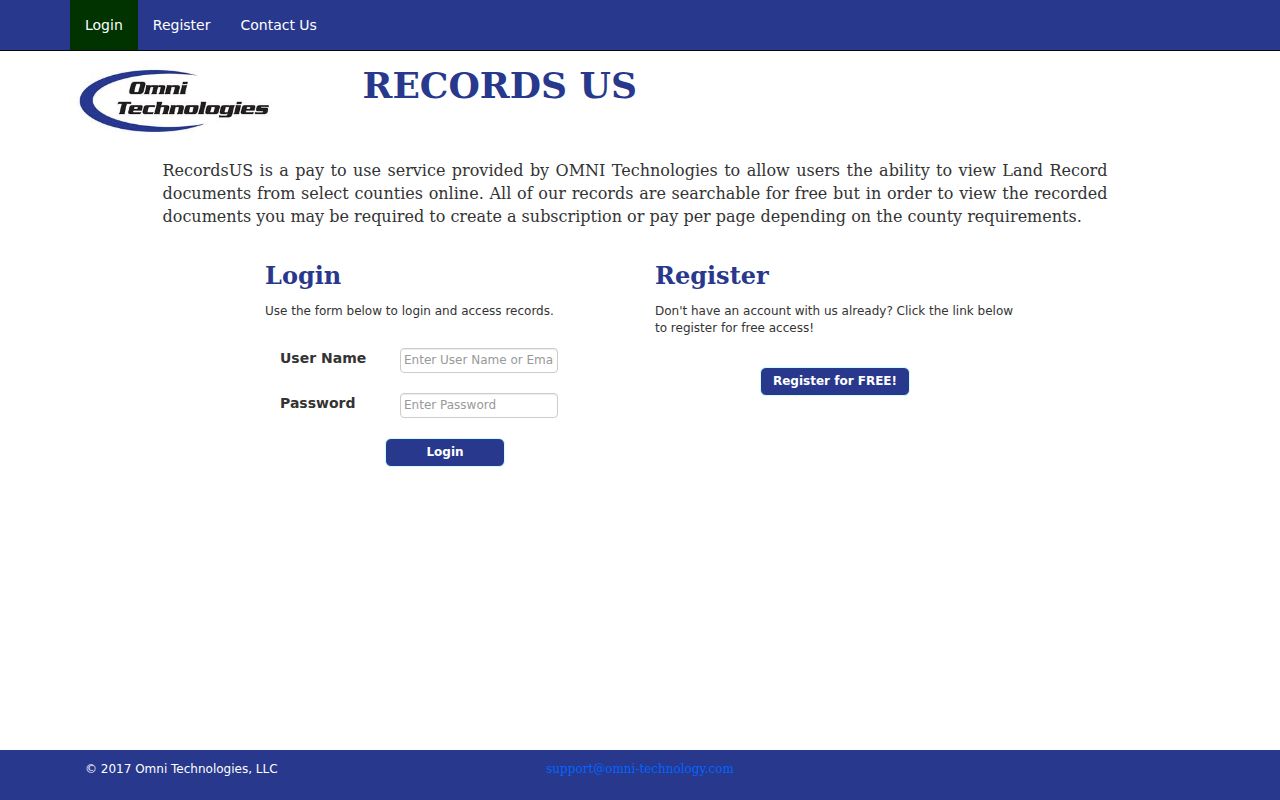
RecordsUS serves as Tate County's online gateway for land records. Search access requires a free account. Images can carry watermarks or paywalls. Subscriptions and per-page controls cover some documents. Free public terminals at the Chancery Clerk's office bypass those costs, though the gateway page itself promises nothing about which record classes are free.
The Land Title Association of Mississippi places Tate County's online land records from 1990 forward. Judgments and federal tax liens sit outside that coverage. Ask at the counter for those gaps.
Instruments Sharing Tate's Index
Deeds are only part of the Chancery Clerk's index map. A title trail can also hold deeds of trust, trustee substitutions, assignments, and releases. It may also carry construction liens, federal tax liens, lis pendens, covenants, easements, and plats. Match every release to its original lien. The legal description must line up too. A shared borrower name proves nothing.
| Index Family | Search Clue | Question Answered |
|---|---|---|
| General deeds | Grantor, grantee, book/page | Who transferred the land? |
| Deeds of trust | Borrower, lender, reference | What security instrument was recorded? |
| Releases and assignments | Original book/page | Was a recorded claim changed or released? |
| Map/Plat Book | Subdivision, lot, page | What division of land was recorded? |
Walk Tate's Grantor-Grantee Chain
A chain of title is the ordered run of transfers touching one piece of land. Start with the current tax-roll owner. Treat that name only as a clue. Find the party as grantee, read back to the prior grantor, and repeat while checking the same parcel and legal description each step of the way.
- Find the newest purchase deed with the current owner as grantee.
- Verify its parcel or legal description against the tax result.
- Copy the grantor, recording date, and book/page or instrument reference.
- Search that grantor as an earlier grantee and repeat.
- Move to deed books, microfilm, or archives before the online cutoff.
- Grantor
- The party transferring an interest.
- Grantee
- The party receiving that interest.
- Chain of title
- The ordered sequence of recorded transfers for the land.
- Book/page or instrument number
- The clerk's locator for a recorded document.
Historic Tate Deed Index Bridges
Tate County deed records did not begin with the internet. The county's web system stops short of the earliest books. The Tate County Genealogical and Historical Society fills that gap. Its holdings include indexes for Deed Books A through C, covering 1873 through 1879. Separate indexes exist for Books D, E, and G. A broad deed index spans 1894 through 1935. An 1873 land assessment rounds out the collection.
MDAH catalogs county records reaching back to 1836. It also points researchers toward county-record finding aids. Ask for a named book or year span. The North Park Street Historic District file offers one concrete Senatobia lead: Plat Book 1, page 2, filed May 27, 1914. Deed Book T, page 590, was recorded April 6, 1917.
Probate Transfers in Tate Chains
Death changes ownership in several ways. An executor or administrator deed, a will, an estate case, a muniment of title, or a title-confirmation action can all move land out of a deceased owner's name. The Chancery Clerk holds both Tate land records and chancery probate matters. That makes it the place to reconcile the two. Mississippi Electronic Courts may offer a docket lead when a matter is online. Sealed material stays excluded. Local public terminals open another channel. A docket name alone proves nothing, so open the order and confirm any resulting land instrument in the recorded deed index.
Tate Recording Fees and Copies
Tate County's 2020 fee schedule sets $26 for the first five pages of many land instruments. Each added page costs $1. Ordinary copies run $0.50 per page at the clerk's office. Certification, imaging, and recording charges vary. The instrument type and the service requested can change the total. So confirm everything before ordering.
A written request should name the parties. It should also name the instrument type, an approximate date, the book/page or document number, and the parcel or legal description. The county request form allows inspection, personal copying, or county-made copies. Mail, in-person, and digital delivery are all options. Mississippi's Public Records Act caps fees at actual search, review, duplication, and mailing costs.
Request a Tate County Deed Copy
An online RecordsUS image works fine for many needs. A certified record or older deed takes the clerk. So do judgments and federal tax liens. The Tate County Chancery Clerk sits at 201 South Ward Street, Senatobia, Mississippi 38668, with public terminals open Monday through Friday from 8 a.m. to 5 p.m. and a land-record line at 662-562-5661.
A precise request saves search time. Give both party names, the deed type, a date range, the book/page or instrument reference, and the legal description if known. Staff can point out index locations but cannot offer legal advice.
Recorded, not guaranteed. Tate County deed records show filed instruments, not a title opinion. Unrecorded interests and indexing gaps can require professional review.
Tate Plats and Legal Descriptions
Legal descriptions settle identity in deed records. Two deeds can share names yet describe different land. The distinction matters whenever a Tate County property search turns up same-name parcels. Subdivision property often cites lot, block, phase, and a recorded plat. Rural tracts work differently. They use section, township, range, or metes and bounds, a boundary drawn from measured directions and distances. The Chancery Clerk maintains the Map/Plat Book records. CMPDD adds a reference parcel layer for orientation.
Senatobia's subdivision rules show the handoff from city approval to county recording. A final plat's title block carries the subdivision name, phase, lot count including common areas, section/township/range, and jurisdiction. After approval, the signed, certified mylar is recorded with the Tate County Chancery Clerk before lots sell or permits issue. The recorded plat governs the final lot layout. Compare the deed's plat citation, the clerk's recorded sheet, and any later amendment; a GIS outline can guide that work but never replaces the recorded plat or a licensed survey.
Tate Liens and Releases
A complete deed review looks past the transfer itself. Search the same parties and legal description for deeds of trust, assignments, substitutions of trustee, construction liens, federal tax liens, lis pendens, easements, covenants, and releases. Lis pendens is a recorded notice that litigation may affect land. It is not a deed. It never tells who won the case. Tate County deed records reward that wider lens.
Build a dated list of every instrument and its recording reference. Match each release to its underlying deed of trust or lien. Check the scope too. Some releases cover only part of the parcel. RecordsUS online coverage does not by itself establish complete online access to judgments or federal tax liens, and the Land Title Association's availability statement expressly excludes those categories. Indexing can lag, so search the courthouse indexes and relevant court records for the gap. A paid loan may lack a properly indexed release, and the public record does not show a lender's current payoff, so those questions call for official copies and qualified title review.
Property Fraud Questions in Tate
Tate County publishes no verified property-fraud alert enrollment page. Do not substitute an unverified commercial alert. Do not assume automatic notice exists. Ask the Chancery Clerk whether the county has added a notification service and how an owner can monitor new filings under a name.
Owners can also watch the land index at intervals. Keep a copy of your recorded deed reference. An unexpected deed, lien, assignment, or solicitation deserves a check against the official clerk record before any payment or response. Use the county's published office number, not contact details printed in a suspicious item. Preserve the envelope, message, or document if fraud seems likely. A search hit still needs inspection. Another party may share a name, or the filing may concern different land.
A disciplined deed abstract exposes breaks. For each transfer, note the recording date, execution date if shown, grantor, grantee, deed type, consideration, legal description, and book/page or instrument number. Keep mortgages and releases on separate lines. Watch for changes in the legal description. A split, combination, correction, or new plat may explain the change. Stop and determine which before moving on.
The tax parcel aids identification, but it does not organize all old deeds. Historic instruments may predate the current parcel system. They may describe land by section, township, range, adjoining owners, courses, or monuments. A metes-and-bounds description follows measured calls around the tract. Match that repeated language across deeds and plats. Never translate it into a legal boundary without survey expertise.
Probate can interrupt a simple seller-to-buyer pattern. Search the deceased owner's estate file for authority granted to an executor or administrator, a will admitted to probate, a muniment-of-title order, or a later confirmatory deed. Match the court case with the recorded instrument. The docket explains process. The Chancery land record supplies the document recorded against the real estate.
Tax-sale material needs date care. Tate County describes an annual online sale and land-redemption inquiry, but the sale date and parcel list change each year. A tax deed makes neither the assessor's current roll nor a stale sale notice conclusive, so review the current clerk and collector records, redemption status, notice history, and later instruments. Legal advice may be needed for redemption rights or title quality.
The Mississippi Public Records Act supports a targeted request when a deed record is not online. Ask to inspect or copy an existing item. Provide enough detail to locate it. Search, review, duplication, and mailing costs may be charged. A request does not require the clerk to build a chain of title, decide ownership, or interpret a document's legal effect.